

Protect Your Children From Online Predators
Parents have a natural instinct to protect their children, and as a parent, it’s important for you to keep an eye on your children and know what they’re doing in order to protect them from harm. We love our children and want to keep them safe. Here are some things you can and should do to keep them safe while they are on the internet.
You
need to make sure that you teach your child how to make smart decisions and how
to be safe. But most importantly, you need to teach them to how to be safe both
in real life and online.
There
are plenty of online predators in the world today that prey on young children,
and with social media and online forums becoming more and more popular among
today’s youth, your children are more at risk.
This
is why it’s very important that you not only talk with your child about the
dangers of online predators, but you also set some guidelines and rules for
their Internet use.
Set time limits.
If
your child is using the Internet for social purposes, make sure you set a time
limit. You can decide how much time is spent on these sites and let your child
know that you’re doing it for their protection.
Keep the computer public.
Make
sure that your family’s computer is in a public room in your home and that your
child is not allowed to use the computer in their own bedroom or separated from
anyone else. This way, you can keep an eye on the sites they visit.
Make rules.
Let
your child know that you are willing to allow them to join a social network as
long as they are friends with you and as long as you have their password. This
way, you can monitor who they’re talking to, what they’re saying and how
they’re using these sites. You can then be aware of anything out of the
ordinary that requires your immediate attention.
Keep it private.
If
your child has a social account, make sure that their account is set to
private. This way, their profile is not publicly viewable to anyone and only
their friends can see what they post. Plus, this also makes their name
unsearchable.
Teach them to be cautious.
Children
are naïve, but it’s important you teach them about the dangers of online
predators. Let them know that not everyone they meet online is who they claim
to be, and that they should never “friend” anyone they don’t know. Tell them
that they should never share intimate details about themselves with online
strangers, and they should never under any circumstance meet someone in person
that they met online.
Keep an eye out.
Even
with your rules and guidelines in place, it’s important to keep an eye on your
child and their use of the Internet. Make sure you pay attention to the sites
they’re visiting and who they’re friends with online. This can help you realize
that your child may be in danger or may be making poor choices (such as abusing
drugs or alcohol), and it can help you create a solution before the situation
gets out of hand.

Digital storage solutions are becoming
more and more essential. Whether it’s the average person looking to store
music or photographs or a large company housing thousands of documents, are being
able to safely store this information as a key. At-home digital storage
can be useful for storing anything, whether pictures, music, movies, personal
documents or any combination of the lot. Businesses small or large can also
make good use of digital storage by utilizing strategies such as data
warehousing.
Digital Storage at Home
Investing in digital storage solutions
for your home can serve a few different purposes. No longer will you need
to take up valuable space in your home with bulky photo albums. Storing
all of your images digitally allows you to organize and access your precious
memories with the click of a button. Creating digital slideshows is now
easier than ever and can be the perfect way to show your family and friends
what you were up to on your last vacation or at your best friend’s wedding.
Digital storage can also help you
condense your collections of CDs and DVDs. Instead of worrying about CDs and
DVDs that get put in the wrong cases, get scratched or damaged, or just plain
lost- you can now have all of your favorite music and flicks available to you
digitally. With the newest technology, it is easier than ever to jam out
to the newest Taylor Swift song in your car or watch the latest Iron Man movie
on your TV.
Consumers looking to purchase such
solutions have a variety of options they can choose from. Before making your
purchase though, consider exactly what it is you want to store. This will help
you determine the type and size of the product that would suit your needs the
best.
Digital Storage for Small Businesses
Data storage for small businesses is a
unique situation. On one hand, smaller companies do not need the same amount of
room that a large corporation requires. They do need the same amount of
security, though. On the other hand, they need more space than typical
households. Due to the risks involved with doing business over the
internet it is always good to protect sensitive information in more than one
location, if possible.
Beyond physical storage solutions like
an external hard drive, small businesses may want to invest in online or
network attached storage and back up. This way in the event of a disaster, as
long as you have internet access, they will have access to their information.
Digital Storage for Large Companies
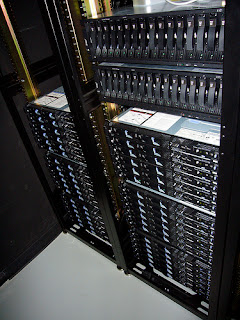
In terms of large companies, digital
storage of data and other information can be crucial. Until the advent of
computers records were kept by hand. Now those records can be stored digitally
to be recalled at any time. The options available vary and again are
tailored to the company’s needs. Long- term storage can help ensure
records are secure, yet accessible for years to come. The practice of data
warehousing can also be important. This practice allows users to condense
multiple sources of information into one central location.
Often large companies have hundreds-of-thousands
or even millions of important documents that must be kept safe.
Many of these documents must be kept for legal purposes so it’s extremely
important for the company to keep them backed-up. With many companies
“going green” the amount of important documents and files going digital is at
an all-time high. With this recent trend, data warehousing
is sure to become an essential asset for most businesses.

In
order for a website to be an effective asset, there needs to be clarity about the
purpose of a website and after it is up and running, the site's traffic needs
to be monitored.
So, this article offers you advice on how to get your website working for you. There are different reasons for building a website, the main one being to make money, usually by selling goods or services. There are international companies looking for a global market and there are shops and trades people looking for customers within a small radius.
To help attract customers
A
website might be developed to spread information. A newspaper or television
company keeps their readers informed of the daily news, while they are also
trying to attract viewers from their competitors. A website might be a meeting
place for people with similar interests. This can be as varied as a site acting
to introduce people looking for potential partners, to a site where people can
swap recipes and discuss the best variety of potatoes to grow.
How to measure the success of the website

You
will need to measure the amount of traffic your website is attracting in order
to have a clear understanding to whether or not the site is operating well. If
the purpose of the website is to sell items and people are buying the goods on
the site, then that obviously means there is some degree of success, although
there may be more that can be done to increase the volume of sales.
It is
useful to be able to see how many people click onto the site and then off
again. More intriguing, how many people browse, fill their shopping baskets and
then leave, without going to the checkout? This information can be found and
used to monitor traffic to the site.
If the site has a forum for discussing topics, then it is easy to see how busy the forum is. Again, are there people who register and read, but never participate?
There is a variety of software available to measure activity around a website including load testing, which will look at how a site functions under heavy demand.

It is possible to find out what device people are using for browsing. Will this
have any impact on how long they stay on your site? What about people who click
on and then off in a couple of seconds. Did they decide in that brief moment
that the site didn't have the information that they required. Is the sites
search engine ranking high enough? A good site on page ten won't get many
visitors.
Monitoring
the use of a website is as important as its initial development and there is
plenty of help available.
Play to Your Strengths
Having
been at university for at least two years before the dissertation deadline
becomes a much larger dot on the horizon, you should have identified which area
of your field you are strongest in. By choosing this area you are likely to cut
down the amount of work you need to do beforehand, as you will not need to do
quite as much research as you might have done by carrying out an investigation
in an area you are not as comfortable in.
Plan Sensibly
It
seems an obvious starting point, but once you have chosen your subject area it
is vital that you sit down and look at how you are going to break down the work
load. In some subjects there are a set of deadlines which help, expecting a
draft of the first half of your dissertation by the end of the first term for
example. If this is not the case, then do not think you can get away with
leaving the work until later in the year, because although you may still reach
the deadline, your work will most certainly be affected due to this decision.
By setting yourself personal goals or deadlines you will find the dissertation
to be a much less stressful task than it could have been.
Aim to Finish Well in Advance of the Final Deadline


Would you drive the equivalent of a
football field going over 55 mph—blindfolded? You probably answered, “Of course
not. That’d be crazy!” But, anyone who has ever sent a text while driving, has
actually done just that. This means, every time you get behind the wheel,
you’re sharing the road with a lot of people driving big machines, who aren’t
really paying attention. Whoa.
Most Dangerous for Young People
 According to an article by Instant Checkmate, vehicle accidents are the
leading cause of death for people between the ages of 15-20. This means that
cars cause more deaths for people of that age group than drugs, guns, or
violence. People within this demographic are more likely to engage in
“distracted driving” habits such as talking to other passengers in the car,
texting, or changing radio stations.
According to an article by Instant Checkmate, vehicle accidents are the
leading cause of death for people between the ages of 15-20. This means that
cars cause more deaths for people of that age group than drugs, guns, or
violence. People within this demographic are more likely to engage in
“distracted driving” habits such as talking to other passengers in the car,
texting, or changing radio stations.
Human error accounts for a staggering
majority of all car crashes—over 90%. According to Alert Driving magazine,
“There are 3,500 deaths a day or 150 every hour, and nearly three people get
killed on the road every minute.” The truth is, driving our cars is one of the
most dangerous activities we will participate in over the course of our
lifetimes, and we do it everyday.
What if Cars Drove Themselves?
Google has been putting major funding
towards research focused on developing a self-propelled car. The exciting part
is, cars that can drive themselves are not something that only exists in
science fiction books—the technology is closer to becoming a reality than you
might think.

Volvo's aim is that by 2020 no one will
ever be killed or seriously hurt driving its latest models. Cheers to that.

Data commonly appears in
plain text or clear text form. For a number of reasons, it sometimes becomes
necessary to hide or disguise the data. During such circumstances, people
choose to encrypt the information to protect it from hackers and other
unauthorized users. Encrypted data is unreadable as the process of encryption
converts the clear text into cipher text hence preserving the integrity of the
file. Data encryption is typically performed by businesses and corporations who
have sensitive data to store and protect against unintended recipients.
How it Works
The
way in which data encryption is achieved is the sender provides a password to
the intended user in a discrete email or via a secured phone line. When the
user obtains the encrypted data, he/she will have to use the provided password
to decipher the code back to its normal clear text form.
To
encrypt and decrypt covert messages, one must use the method of cryptography.
It employs mathematics to store sensitive data. A computer user can transfer
the coded data through an unsecured connection without worrying that the
content will be compromised. A scientific formula known as "cryptographic
algorithm" runs in combination with a code, which can be either a number
combination or a phrase, to encrypt the data. The plain text can be converted
into cipher text using various keys. Employing a dynamic cryptographic formula
and keeping the password in secrecy are imperative steps for the entire process
to work.
Types of Encryption
There
are different types of encryption. The ubiquitous browser and email encryptions
are the most usual types. Browsers automatically hide information through a
secure server. The encrypted domain has the traceable address starting with
HTTPS, with the "S" connoting secure. The server then decodes the information
when it arrives. For emails, the function of PGP is the normal encryption
chosen. This hides private messages, sensitive documents, and folders.
Encrypting
a hard drive is another common form of encryption. This maintains the security
and integrity of sensitive information. Comprehensive hard disk drive
encryption, restriction of user operator encryptions, and creation of an
individual encrypted virtual drive that solely constitutes of hidden data are
the three techniques for encrypting a hard drive.
Why Encryption?

Encryption
has long been performed by government agencies and military forces to carry out
covert communication. Today, it is also used by civilians and commercial groups
to facilitate data security. In previous years, there have been multitude
reports of sensitive information like client's personal records being accessed
and used via lost ot stolen laptops or external hard drives. By encrypting data
stored in your computer, you are protecting yourself in case tactile security
protocols are unsuccessful. Another good example of encrypting data at rest is
that of Digital rights management systems that avert unintended access or
reproduction of copyrighted content and safeguard programs against reverse
engineering.
Though
encryption can individually protect the secrecy and confidentiality of files
and documents, there are other methods still needed to achieve maximum security
for your data; for instance, a MAC, short for message authentication code,
confirmation and/or a digital signature. Keep in mind that advance hackers and
cryptographers can still access and use messages without decrypting it, usually
through specialized techniques and software like Tempest and Trojan Horse.

So you finally gave in and
got your child an iPad. That’s great, but what now? Fortunately there are
accessories, applications and downloads just for kids. And don’t worry; there
is stuff for the ipad 1, the ipad 2, the ipad3 and so on! Cool huh? Whether you
want a kid-friendly iPad case or a just cool keyboard…
there is much to choose from. These products are out there; you just need to
know where to look. But right now, we’re going to help you out. Follow these
instructions, do some research and your kid will be thanking you over and over
again.
Solar Powered Keyboard
With
today’s technology, almost anything is possible… and this accessory proves it.
No more batteries, no more charging and no more dying devices. It’s time to go
green and go solar, your iPad
will thank you later. Not only is this accessory solar, it’s also a keyboard.
Your kids can use it do homework, write letters and even play games. That
means no more dead battery’s before homework is done, and every parent can
appreciate that.
The Crayola Pack
The
Crayola Pack is perfect for any child, male or female. Your kids will be using
their imagination in no time. They can play with different looks and effects on
any image they want. Making something creative for Grandma and Grandpa just got a
whole lot easier!
Teenage Mutant Ninja Turtle iPad Car
That’s
right… you heard me right. I said the Teenage Mutant Ninja Turtle car for your
kid’s iPad. Now how does it work? This inflatable car is fun for children of
all ages. Pump it up, hop in and play away. It’s like their own little car
every time they use the iPad. Plus, this amazing inflated car also comes in a
SpongeBob Square Pants design and a Dora The Explorer design!
iPad Learning Centers

Fortunately
there are many fun learning applications and devices available to you and your
children. Do some research and check the reviews to find the right
accessory for your child. Some kids like sports and some like animals… but
don’t worry; there are fun and games for everyone. Think of it this way. They
have fun playing and you get to watch them learn. If that’s not a win-win, I
don’t know what is.
This
is just the tip of the iceberg. If you can’t find a kid friendly application
for your child, you may not be looking hard enough. And don’t worry about
compatibility, there are fun games for the iPad 3, stylish cases for the iPad 2 and well… you get the point.
 As a business owner, you
simply cannot continue to survive in this age of information without at least
becoming a bit techno-savvy. That does not mean that you have to spend your
spare time tweeting, or responding to blog posts. However, it does mean that,
at the very least, you should have a solid understanding of the implications of
social media and its effects on your business. Are you prepared to handle IT
concerns that might arise from employee termination? For Example: You
fire or layoff an employee. What happens next? Does he destroy your social
media presence; on your account or his own; or do you block him? Do you even know? Read on
to learn more:
As a business owner, you
simply cannot continue to survive in this age of information without at least
becoming a bit techno-savvy. That does not mean that you have to spend your
spare time tweeting, or responding to blog posts. However, it does mean that,
at the very least, you should have a solid understanding of the implications of
social media and its effects on your business. Are you prepared to handle IT
concerns that might arise from employee termination? For Example: You
fire or layoff an employee. What happens next? Does he destroy your social
media presence; on your account or his own; or do you block him? Do you even know? Read on
to learn more:
Employee termination and social media.
A recent occurrence on
Twitter turned a spotlight onto this immediate danger that could very well
become commonplace for businesses that do not take measures to protect
themselves. It involved HMV, a popular UK music products distributor that has
been going under financially for some time. Apparently, a group of workers from
the HMV human resources department, disgruntled at the knowledge of their
layoff, hijacked HMV's twitter account and tweeted blow-by-blow details of the
mass firing of 60 people. The tweets were negative - definitely not
complimentary of HMV - and quite possibly on the final nails in the looming HMV
coffin.
What this means to your business.
Quite simply, a considerable
chunk of your business reputation is formed by the virtual world. The things
other people say and share about your business can cause a ripple effect of
damage. Therefore, it is of utmost importance that you do everything within
your power to protect your online business reputation against those who may
likely be out to get it: those employees you had to terminate.
How you can prevent costly IT mishaps.

You can no longer afford to
keep social media in the back of your business mind. Any time one of your
decisions or dealings may affect your employees, you are vulnerable to a breach
of trust and a potentially damaging information leak via technology and social
media. In order to protect yourself, you need to require that your employees
sign an employee agreement that clearly states your social media privacy
policies. Also, you should have a procedure in place to block employee access
to your business social media accounts and/or reset the passwords immediately
preceding your decision to terminate an employee that has access to that delicate
information.
Whether
you know it (or like it) or not, social media presents a clear and present
danger to your business. Protect your online reputation by addressing these IT
concerns, before it is too late and unhappy ex-employees have the opportunity
to put your business' private matters on the social media parade.

Many people seem to sniff at
the idea that their online identity is something worth worrying about. After
all, what damage can a face book, a tweet and a pinterest really do right?
WRONG! Today’s modern world exists primarily in the virtual sphere, and with
increasingly intelligent and sophisticated technology, our online identity can
be used to mar your reputation, break into your accounts, create passports, buy
houses and travel the world on credit cards all by virtue of your online
presence. There are many reasons why you should protect your online
identity and today we are going to go through the top 4.
1.) Its yours
Sounds
obvious, but people looking for you online are likely to type your name into
their social networks. What turns up, all depends on who owns and manages your
online identity. Today, everybody Googles – so that means potential employers,
business partners and associates, long lost friends and family members,
colleagues, investors, estate agents: pretty much every one you will ever deal
with could potentially Google you and find information about you. Therefore,
its important that when they do find you and interact with you – it is you that
is responding and not someone else.
2.) It’s a gateway to a real identity
Identity
theft is no small, laughing matter. Most social networks are linked to each
other and someone accessing just one of your social networks can quickly reveal
a host of information that can be replicated to create a real life identity in
your name. A real life identity in your name can then have access to everything
anyone else does, with none of the risks associated and that means large and
small purchases, debt, credit, passport and more. Why take the risk? Many
people make the mistake of thinking only “important” people get hacked, however
this philosophy is as weak as believing that only rich people have their homes
broken into. Criminals are opportunists more than they are strategists and
therefore protect yourself as much as you can because your online identity is a
gateway to a real and false identity in your own name, and also gain access to
your personal banking information.
3.) Its your reputation
There
is a common saying that words once said cannot be taken back, and the same is
true of any information that you are streaming out onto the internet. Some
people create online identities and hack into social media accounts only for
fun, and this can create havoc with your online reputation and your personal
computing equipment. An unprotected identity is a vulnerable identity, opening
up your computer and Smartphone to viruses and creating an easy platform for a
person to promote questionable websites and content in your name.
4.) Its very difficult to solve the problem once it has started
 Protecting
your identity is also a good idea because if you protect it, then hopefully you
will never have to go through the painstaking process of having to solve a
problem with it. Once your social media and bank accounts have been
compromised, you will need to spend many hours on the phone, filing complaints,
explaining the situation to any people who have interacted with you and also
you will have to change passwords and pins. Save yourself the trouble, and keep
your identity protected instead.
Protecting
your identity is also a good idea because if you protect it, then hopefully you
will never have to go through the painstaking process of having to solve a
problem with it. Once your social media and bank accounts have been
compromised, you will need to spend many hours on the phone, filing complaints,
explaining the situation to any people who have interacted with you and also
you will have to change passwords and pins. Save yourself the trouble, and keep
your identity protected instead. 
It seems that Apple has been
in the news a lot lately, and not for its groundbreaking technological
gadgetry. What's going on? If you want to learn more about a big-time lawsuit
involving Apple and some other major players, then you've come to the right
place. Here is what you need to know about Apple, Macmillan, and ebook price
fixing:
The lawsuit.
In April of 2012, the United
States Department of Justice filed a large lawsuit against Apple and a
handful of major publishers, including Simon & Schuster, Hachette,
Penguin, HarperCollins, and Macmillan. The allegation is that these publishers
have been working together to keep the prices of ebooks unnecessarily high in
Apple's iBookstore and Amazon (as well as other, smaller online book
retailers), trumping Amazon's previously accepted standard price of $9.99.
According to federal lawmakers, this is in breach of United States antitrust
law.
Apple left to battle alone.
For a while, Macmillan was
holding strong with Apple, refusing to cave to the allegations. However, just
recently, Macmillan threw in the towel - not admitting to any wrongdoing but,
rather, citing financial limitations in the need to settle. According to
Macmillan, the economic strain of continuing the court battle could potentially
put the relatively small (when compared to the others) publisher. This leaves
Apple to toe the line alone, and Apple doesn't show any signs of backing down.
How will this end up for Apple? As of yet, we have no way of knowing. Apple's
legal proceedings are not scheduled to take place until June of 2013.
What the settlements mean for consumers.

These recent developments
could have seriously exciting implications for consumers. Not only does it
appear that prices will automatically be lower (some of the settling publishers
have already disclosed plans to lower prices), but it also seems that you can
expect to have a number of new ways to access the ebooks you love. These
include subscriptions to authors or genres of your choosing, monthly
memberships (picture unlimited ebook access) to publishers' and retailers' book
clubs, and ebook renting. While it will take at least sixty days for the settlements
to be reviewed and enacted by the court system, you can rest assured that, when
that waiting period is over, readers will rejoice from lower prices and
exciting new ebook options.
Apple
is, once again, in the midst of controversy. Fortunately, it appears that this
controversy could ultimately result in more money in your pocket book - and
more books on your ereader. Stay tuned to find out when, exactly, these changes
will reach you, the consumer.

If you have spent any time
around electronics then you know that cables are a requirement. These cables
help electronic devices sent, receive and transmit data all around the world.
Different cables perform different features and functions allowing your
computer to perform its best. Though cables help computers perform great they
can be potential hazards for the average user. Primarily they can become
tangled up and damaged and they can be exposed to extreme temperatures
resulting in malfunctions. Once these cables have malfunction you will have to
replace them which may cost you more money in the end.
Saving you Time and saving you Money
With
the 28AWG HDMI High Speed Cable with Ethernet you will have a universal cable
that can connect to any of your electronic devices. These devices will be
optimized to their best working ability. Since these cables are universal they
work as great replacements for your electronic devices that can save you money!
Most of the time when a computer part or accessory needs to be replaced or
repaired the cost is extremely high. With the HDMI high speed cable you will
only have to pay for one cable that is both cheap as well as one of the best
hdmi cables.
These
cables are perfect for high definition televisions because they allow you to up
stream as well as down stream both audio and visual data with ease. High
definition televisions usually require the need of two cables to perform this
action, but with the HDMI cable you only need one. This cable also delivers
high resolution definition that exceeds 1440p. This means whenever you watch a
movie or television show on your television, smart phone or computer that was
downloaded with this cable, it will be shown in the highest resolution
available.
Various Devices Benefit From
HDMI Cables

High
definition televisions are not the only devices that can benefit from this
cable. 3-D projector can be optimized with the help of this HDMI cable. Imagine
being able to watch your favorite film with amazing clarity that would rival
that of an movie theatre projector. The sounds like will be crisper and the
sights will be more vibrant offering your friends and family a unique entertainment
experience. The cable itself is unique! It comes in a large range of sizes that
can accommodate any need. From 5 feet to 15 feet these cables help users
optimize all of their favorite electronic devices.

We
all know the famous statement: Content is the king. However, many people don't
use all the benefits of content marketing. In this article, i will give you a
few tips about how to write a great and shareable content which can boost your
rankings very fast. This is all based on my trials and errors with content
marketing for techkow.com.
Also,
we all want to create a website that makes money, right? But somehow, people
don't comprehend the importance of having a great content on the website. If
you don't have an interesting content, nobody will visit your website again.
There are a plenty of good ideas to make money online, but neither one will be
successful without a proper content marketing. Even if you just want to make
extra cash online, you need to implement these tips about content marketing
strategy, because content marketing should be a bloodstream of your online
marketing strategy.
Research your market but first research your content
You
need to brainstorm about your topic and research for the quality sources for
more information. Poorly researched content or grammar and spelling errors will
turn off most of the visitors.

Don't underestimate the so called "power of the lists"
People
love the lists. Top 10 of this or 5 easy ways to do that...these are just
examples of "lists" articles. You should focus on it and make at
least one "top 10 of..." list per month for your blog.
What about comment section?
Your
job is not done when you publish your article. In fact, it just begins. Be
conversational, because conversation in a comment section is a two way street.
You can feel the pulse of your loyal readers, answer to their additional
questions, etc. This way you will engage your readers even more.
Read
comments for your blog posts on a daily basis. Interact as much as you can.
This is a surefire way to increase the number of readers and build your online
reputation faster.
Quality over quantity
Instead
of being a hyper productive writer, hoping that will be the way to make some
quick cash online through your website, you need to focus on creating great,
not average content. You will gain a few extra backlinks with average content,
but you can't expect your poor content will be shared on the social networks.
Therefore, you need to think about your title, subtitles and content
quality.
Plan
ahead

Like
I said, you need to write great content which is shareable. You need to plan
ahead about your possible topics. Research for the few similar blogs. What are
their topics? Which blog post has the greatest number of comments? Examine that
subniche and find quality resources to write great content on a similar topic.
These
would be just five great tips about content marketing based on my own
experience. You can share with us your additional tips for content marketing
techniques.

The painful truth about the difference between business
analytics and business intelligence is that if you ask two people to tell you
the difference, you're going to get two conflicting sets of differences
explained to you. A lot of business analysis terms get misused, reinterpreted
and misappropriated until their original meaning is a murky memory from the
distant past.
It's not so much that there is no
difference, it's just that you need to be prepared to acknowledge
that people are going to fight you on it, and that you can't assume that you're
speaking the same language as everyone else in the room until you break it down
into plain English. Everyone has their own idea of what every business term
means, so until we get down to talking about the actual points of data and the
strategies being used, there's going to be a lot of confusion.
In other words, a lot of the difference between business
analytics and business intelligence comes down to semantics, and who showed up
for what meeting. Go to two different offices and you'll find that they've both
developed their own vernacular. Some will use "analytics" and
"intelligence" almost interchangeably while others have a strict
definition for each.
A Look at the Data and Trends
You
need only take a look at Google Trends to see how these terms are used: since
2004, the term "business analytics" has been slowly, gradually
decreasing, while the term "business intelligence" took a sharp
increase in 2009 and has been gradually increasing since, following a spike
here and there over the years.
In
other words, one phrase seems to be replacing the other.
A
common understanding is that business intelligence is
the whole field of business analysis and IT, while business analytics is just
the math part itself, not the strategizing, not the planning and marketing,
just the math. Of course, another common understanding has it the other way
around.

Most
frequently, the difference in semantics seems to come down to one person or the
other insisting that what they do is more dynamic and forward-thinking than the
IT-only, rear-view perspective offered by the other guys. The truth is that by
far the easiest way to communicate with your staff and your partners and your
clients is to just call it "reporting." If you know that a prospect
loves calling it "business intelligence," go ahead and call it
business intelligence when he's in the room, otherwise, you might as well
acknowledge that the terms are used interchangeably in the modern meeting room.
Some people cling to one term or another, but at the end of the day we're all
pretty much talking about the same thing.


 Posts
Posts



