
Showing posts with label data storage. Show all posts
Showing posts with label data storage. Show all posts

Digital storage solutions are becoming
more and more essential. Whether it’s the average person looking to store
music or photographs or a large company housing thousands of documents, are being
able to safely store this information as a key. At-home digital storage
can be useful for storing anything, whether pictures, music, movies, personal
documents or any combination of the lot. Businesses small or large can also
make good use of digital storage by utilizing strategies such as data
warehousing.
Digital Storage at Home
Investing in digital storage solutions
for your home can serve a few different purposes. No longer will you need
to take up valuable space in your home with bulky photo albums. Storing
all of your images digitally allows you to organize and access your precious
memories with the click of a button. Creating digital slideshows is now
easier than ever and can be the perfect way to show your family and friends
what you were up to on your last vacation or at your best friend’s wedding.
Digital storage can also help you
condense your collections of CDs and DVDs. Instead of worrying about CDs and
DVDs that get put in the wrong cases, get scratched or damaged, or just plain
lost- you can now have all of your favorite music and flicks available to you
digitally. With the newest technology, it is easier than ever to jam out
to the newest Taylor Swift song in your car or watch the latest Iron Man movie
on your TV.
Consumers looking to purchase such
solutions have a variety of options they can choose from. Before making your
purchase though, consider exactly what it is you want to store. This will help
you determine the type and size of the product that would suit your needs the
best.
Digital Storage for Small Businesses
Data storage for small businesses is a
unique situation. On one hand, smaller companies do not need the same amount of
room that a large corporation requires. They do need the same amount of
security, though. On the other hand, they need more space than typical
households. Due to the risks involved with doing business over the
internet it is always good to protect sensitive information in more than one
location, if possible.
Beyond physical storage solutions like
an external hard drive, small businesses may want to invest in online or
network attached storage and back up. This way in the event of a disaster, as
long as you have internet access, they will have access to their information.
Digital Storage for Large Companies
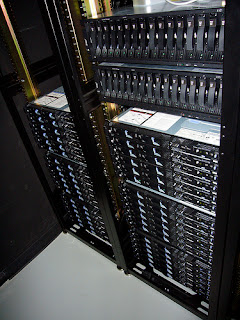
In terms of large companies, digital
storage of data and other information can be crucial. Until the advent of
computers records were kept by hand. Now those records can be stored digitally
to be recalled at any time. The options available vary and again are
tailored to the company’s needs. Long- term storage can help ensure
records are secure, yet accessible for years to come. The practice of data
warehousing can also be important. This practice allows users to condense
multiple sources of information into one central location.
Often large companies have hundreds-of-thousands
or even millions of important documents that must be kept safe.
Many of these documents must be kept for legal purposes so it’s extremely
important for the company to keep them backed-up. With many companies
“going green” the amount of important documents and files going digital is at
an all-time high. With this recent trend, data warehousing
is sure to become an essential asset for most businesses.

Data commonly appears in
plain text or clear text form. For a number of reasons, it sometimes becomes
necessary to hide or disguise the data. During such circumstances, people
choose to encrypt the information to protect it from hackers and other
unauthorized users. Encrypted data is unreadable as the process of encryption
converts the clear text into cipher text hence preserving the integrity of the
file. Data encryption is typically performed by businesses and corporations who
have sensitive data to store and protect against unintended recipients.
How it Works
The
way in which data encryption is achieved is the sender provides a password to
the intended user in a discrete email or via a secured phone line. When the
user obtains the encrypted data, he/she will have to use the provided password
to decipher the code back to its normal clear text form.
To
encrypt and decrypt covert messages, one must use the method of cryptography.
It employs mathematics to store sensitive data. A computer user can transfer
the coded data through an unsecured connection without worrying that the
content will be compromised. A scientific formula known as "cryptographic
algorithm" runs in combination with a code, which can be either a number
combination or a phrase, to encrypt the data. The plain text can be converted
into cipher text using various keys. Employing a dynamic cryptographic formula
and keeping the password in secrecy are imperative steps for the entire process
to work.
Types of Encryption
There
are different types of encryption. The ubiquitous browser and email encryptions
are the most usual types. Browsers automatically hide information through a
secure server. The encrypted domain has the traceable address starting with
HTTPS, with the "S" connoting secure. The server then decodes the information
when it arrives. For emails, the function of PGP is the normal encryption
chosen. This hides private messages, sensitive documents, and folders.
Encrypting
a hard drive is another common form of encryption. This maintains the security
and integrity of sensitive information. Comprehensive hard disk drive
encryption, restriction of user operator encryptions, and creation of an
individual encrypted virtual drive that solely constitutes of hidden data are
the three techniques for encrypting a hard drive.
Why Encryption?

Encryption
has long been performed by government agencies and military forces to carry out
covert communication. Today, it is also used by civilians and commercial groups
to facilitate data security. In previous years, there have been multitude
reports of sensitive information like client's personal records being accessed
and used via lost ot stolen laptops or external hard drives. By encrypting data
stored in your computer, you are protecting yourself in case tactile security
protocols are unsuccessful. Another good example of encrypting data at rest is
that of Digital rights management systems that avert unintended access or
reproduction of copyrighted content and safeguard programs against reverse
engineering.
Though
encryption can individually protect the secrecy and confidentiality of files
and documents, there are other methods still needed to achieve maximum security
for your data; for instance, a MAC, short for message authentication code,
confirmation and/or a digital signature. Keep in mind that advance hackers and
cryptographers can still access and use messages without decrypting it, usually
through specialized techniques and software like Tempest and Trojan Horse.


 Posts
Posts



