
Showing posts with label business. Show all posts
Showing posts with label business. Show all posts

The popularity of free conference call service
Free conference call service
has become very popular because it allows you to easily and efficiently
communicate in the business world. It allows you to save time and money and you
will be able to get the results you wanted in just a short period of time. Businessmen
don’t need to schedule business trips and spend money just to attend those
meetings. Through free conference call service, you can now say goodbye to out
of town meetings. You will be able to save money and be able to have more
productive days.

The importance of free conference call service
If you are running a business,
then you know very well the value of time and money. There are significant
people in the business and constant communication with these people is very
important in order for the business to keep running smoothly. The easy way to
contact these people is by making a phone call, but if you are searching for
faster and efficient solution, then free conference call service is the perfect
choice.
Through conference call, you
will be able to talk to these people all at once. It is a valuable and
indispensable way of saving time while maximizing end results. It will also let
other people feel that they are an essential part of the business, especially
when it comes to critical decision making.
How to get started?
Starting with a free calling
service is easier than you can ever imagine. If you are going to search online,
you will find a lot of providers offering free calling service. The very first
thing you should do to get started is find a provider that caters to your
specific needs. Make sure you are going to sign up with providers that offer
free conference call service. Before signing up, you have to read all pertinent
details including the terms and conditions. Some providers incur hidden charges
so you have to take note of this. However, there are some restrictions in using
free conference call service. One of the common restrictions is the total
number of callers provided into your number. The restriction depends on the
types of services offered to you.
How to find the right free conference call service?


The
retail industry has been faced with a number of pressures and challenges for
many years. These are generally most keenly felt by middle managers and
those who work ‘at the coalface’ on the shop floor and at the sharp end of the
supply chain. One common feature of the whole industry is that decisions that
are made in boardrooms are often seen to be unrealistic, and that the
objectives of those at different levels don’t seem to go hand in hand.
That
said, the challenges that the sector faces are ones that have to be tackled at
all levels. We explored some of retail’s biggest pressures that will be felt
strongly throughout the year.
Rise of the Giants
Unless
you are fortunate enough to work in a supermarket or department store, it is
likely that life at work consists of fighting on a daily basis to make enough
money just to stay open. The continuing rise of e-commerce as a universally
popular shopping solution means that smaller businesses and even larger yet
less popular chain stores are always operating in the face of uncertainty.
These
businesses need to do more to revolutionise the shopping experience for their
customers, as the trend towards cost savings that many have followed in recent
years will soon have cut as much as it can.
Squeezed Margins
Whether
it is mandatory increases in a minimum wage level or extra charges that need to
be paid in order to ensure the constant delivery of products, profit margins
will continue to be squeezed in ways that will drive businesses to tough
decisions.
Some
will choose to raise prices, however in doing so will leave themselves open to
criticism around being ‘out of touch’ and not catering to individuals and
families who are already struggling for money. Unfortunately, businesses
will often have no choice but to take this action, or risk failing
themselves.
Unpopular By Association
You
can find great shops wherever you go, however if you are in a store that
happens to be on a street that has a number of empty units, then you will
likely see your business suffer through no fault of your own.
Unfortunately,
as certain towns and cities around the world start to develop no-go areas for
various reasons, this lack of footfall will inevitably lead to many retailers
closing down.
There
is no question that, in terms of providing continuous growth and a profitable
operation, retail is one of the toughest sectors in which to succeed. However,
with a thorough level of planning and an appreciation of how one can act in the
face of competition, it is possible for retail success stories, rather than
failures, to be the big economic news story of 2013.
Robert
is an online content writer across a variety of subjects, however has a
specific interest in how point of sale and other systems influence retail
operations. In addition, Robert's previous work has adapted a number of seo marketing frameworks to detect the
relationship between marketing, technology, and business success.

If your business is still on
traditional phone lines, you're wasting money. That shouldn't be news; the
exodus of companies large and small has been fueled by the greater efficiency
and cost effectiveness of VOIP, or Voice Over Internet Protocol (plain English:
your phone connects to the internet instead of a phone line). The advantages of
VOIP are pretty well understood, but with services like Skype offering limited
VOIP for free, business owners still debate whether hosted VOIP is worth it.
Hosted VOIP offer a dedicated,
across-the-board VOIP service to replace your conventional phone system. Is it
worth it? We think it is. Here are five reasons why:
Cost savings. You can keep your old
phone system and just use Skype for free long distance, but that still means
you're throwing away a huge amount of money for the privilege of using an
outdated technology. Conventional phones require more infrastructure and cost
your business more. VOIP comes at a fraction of the cost.
PBX. What do you call a digital version of
your multi-line, multi-extension business phone system? PBX. PBX service is
basic with most hosted internet phone plans, and it's more reliable, less
costly to maintain, and easier to reconfigure if your business grows or moves.
Reliability. VOIP is a highly
reliable way of communicating. Using less analog parts and more modern
technology, it suffers few service failures. When a failure does occur, it's
usually localized and easy to diagnose and fixed rapidly.

Built-in business features. VOIP is one of the
most flexible communication platforms because it offers the best of both the
internet and traditional phone system, and features can be coded in easily
without any infrastructure change. Video calls, three-way and conference calling,
large voicemail systems, and other crucial business features are not only
available; they're far easier with VOIP than with a phone.
Dedicated support. When you use a
traditional phone system, any loss of service leaves you on hold with a giant
communication company that has thousands of miles of wires to check. VOIP
hosted plans are dedicated business products and typically offer prompt,
reliable support and service.
Businesses of any size can see
substantial services by switching to a hosted VOIP plan to handle their telephone needs. Since it's scalable, the
savings can be just as significant for an office of five people as they are for
a Fortune 500 company. Does your business use VOIP?

Things to Watch for in the Event App Industry in 2018
Have you noticed the recent explosion in event apps? There is now a huge demand for ways for people to go from online to offline. From Yelp to Eventbrite to Meetup, many people are relying on their phones to discover interesting events and ways to enhance their experience at the event. Here are 5 things to watch for that are currently developing in the event app industry.
1. Building Brand Loyalty
As of 2013, there’s more competition than ever to make sure that your users trust you. There are already established events apps players in the industry, but there’s always room for more niche event apps. For example, an app focused on finding venues for musicians will have a much easier time building a loyal following in the music space. Similarly, tech entrepreneurs will have a different focus for their networking needs, and if your app is the authority, it will be easier to build up the brand loyalty that will keep paying you dividends down the road.
2. Gamifying the Experience
Another trend that is happening is how apps are making the mundane fun. You could reward desired behavior with a points system and encourage new event attendees and consistent attendees with badges and other rewards for recognition. If you make the game fun for users, they will keep coming back again and again.
3. Integrating Monetization
Your users are willing to pay to go to worthwhile events, and naturally if your app consistently helps your users discover great events, you can and should charge. Depending on how many events your app is able to curate and how much your user space is willing to contribute to be in the know about these events, you would be able to charge a percentage off of the event as in the case of Eventbrite.
4. Going Green
One of the top advantages that mobile apps have is that they are good for the Earth. Instead of having to fumble and search for a paper ticket, with a mobile app, you reduce the need to print for your customers and help the environment by eliminating a paper trail. By eliminating paper tickets, you can also speed up the check in process and make your users’ first interaction with your app a seamless and pleasant experience.
5. Increasing Engagement
More so than any other niche in the app industry, event apps serve the need to feel connected. What would be more connected than being updated by something that is constantly with you--your phone? It is important to have regular push notifications and reminders for your users before the event.
There has been an explosion in the mobile app development space, and event apps are no exception. As of 2013, the space is maturing. Many event apps are building brand loyalty, gamifying the experience, integrating monetization, going green, and increasing engagement. Will your app take advantage of these trends?
 As a business owner, you
simply cannot continue to survive in this age of information without at least
becoming a bit techno-savvy. That does not mean that you have to spend your
spare time tweeting, or responding to blog posts. However, it does mean that,
at the very least, you should have a solid understanding of the implications of
social media and its effects on your business. Are you prepared to handle IT
concerns that might arise from employee termination? For Example: You
fire or layoff an employee. What happens next? Does he destroy your social
media presence; on your account or his own; or do you block him? Do you even know? Read on
to learn more:
As a business owner, you
simply cannot continue to survive in this age of information without at least
becoming a bit techno-savvy. That does not mean that you have to spend your
spare time tweeting, or responding to blog posts. However, it does mean that,
at the very least, you should have a solid understanding of the implications of
social media and its effects on your business. Are you prepared to handle IT
concerns that might arise from employee termination? For Example: You
fire or layoff an employee. What happens next? Does he destroy your social
media presence; on your account or his own; or do you block him? Do you even know? Read on
to learn more:
Employee termination and social media.
A recent occurrence on
Twitter turned a spotlight onto this immediate danger that could very well
become commonplace for businesses that do not take measures to protect
themselves. It involved HMV, a popular UK music products distributor that has
been going under financially for some time. Apparently, a group of workers from
the HMV human resources department, disgruntled at the knowledge of their
layoff, hijacked HMV's twitter account and tweeted blow-by-blow details of the
mass firing of 60 people. The tweets were negative - definitely not
complimentary of HMV - and quite possibly on the final nails in the looming HMV
coffin.
What this means to your business.
Quite simply, a considerable
chunk of your business reputation is formed by the virtual world. The things
other people say and share about your business can cause a ripple effect of
damage. Therefore, it is of utmost importance that you do everything within
your power to protect your online business reputation against those who may
likely be out to get it: those employees you had to terminate.
How you can prevent costly IT mishaps.

You can no longer afford to
keep social media in the back of your business mind. Any time one of your
decisions or dealings may affect your employees, you are vulnerable to a breach
of trust and a potentially damaging information leak via technology and social
media. In order to protect yourself, you need to require that your employees
sign an employee agreement that clearly states your social media privacy
policies. Also, you should have a procedure in place to block employee access
to your business social media accounts and/or reset the passwords immediately
preceding your decision to terminate an employee that has access to that delicate
information.
Whether
you know it (or like it) or not, social media presents a clear and present
danger to your business. Protect your online reputation by addressing these IT
concerns, before it is too late and unhappy ex-employees have the opportunity
to put your business' private matters on the social media parade.

The painful truth about the difference between business
analytics and business intelligence is that if you ask two people to tell you
the difference, you're going to get two conflicting sets of differences
explained to you. A lot of business analysis terms get misused, reinterpreted
and misappropriated until their original meaning is a murky memory from the
distant past.
It's not so much that there is no
difference, it's just that you need to be prepared to acknowledge
that people are going to fight you on it, and that you can't assume that you're
speaking the same language as everyone else in the room until you break it down
into plain English. Everyone has their own idea of what every business term
means, so until we get down to talking about the actual points of data and the
strategies being used, there's going to be a lot of confusion.
In other words, a lot of the difference between business
analytics and business intelligence comes down to semantics, and who showed up
for what meeting. Go to two different offices and you'll find that they've both
developed their own vernacular. Some will use "analytics" and
"intelligence" almost interchangeably while others have a strict
definition for each.
A Look at the Data and Trends
You
need only take a look at Google Trends to see how these terms are used: since
2004, the term "business analytics" has been slowly, gradually
decreasing, while the term "business intelligence" took a sharp
increase in 2009 and has been gradually increasing since, following a spike
here and there over the years.
In
other words, one phrase seems to be replacing the other.
A
common understanding is that business intelligence is
the whole field of business analysis and IT, while business analytics is just
the math part itself, not the strategizing, not the planning and marketing,
just the math. Of course, another common understanding has it the other way
around.

Most
frequently, the difference in semantics seems to come down to one person or the
other insisting that what they do is more dynamic and forward-thinking than the
IT-only, rear-view perspective offered by the other guys. The truth is that by
far the easiest way to communicate with your staff and your partners and your
clients is to just call it "reporting." If you know that a prospect
loves calling it "business intelligence," go ahead and call it
business intelligence when he's in the room, otherwise, you might as well
acknowledge that the terms are used interchangeably in the modern meeting room.
Some people cling to one term or another, but at the end of the day we're all
pretty much talking about the same thing.

Many people who start a
website won’t have anything to do with it. Right from the moment they sign a
hosting contract and register a domain, they will allow a designer and content
writer to take care of their needs, before handing over to a webmaster to
manage the site on their behalf on an on-going basis.
Others,
whether through misplaced faith in their ability or a desire to save money,
will instead opt to do everything themselves, helped by the growing number of
companies that offer generic templates that ‘get your business online within an
hour,’ for example.
We
looked at the latter scenario, and explored a number of reasons or indicators
that it may be time to hire a webmaster.
Time Demands
It
may be the case that you are actually decent in terms of designing a site and
maintaining the content, but is it stating to take up too much of your time
when you need to be selling products or building customer relationships?
Even
if you outsource things such as content creation, liaising with a writer can
take up a considerable amount of time. By placing this in the hands of a
webmaster, you will be immediately free to take care of the other areas that
are going to generate your revenues. You then have the option of seeking out a
webmaster who is skilled at creating original, quality content, or allow them
to manage a small budget to outsource this task.
Poor Performance
The
reality for many website owners is that having a quality web offer is nothing
like as easy as adverts from certain companies portray it to be. Sometimes, the
honest site owners need to look at themselves and admit that what they have
done isn’t very good, and that the cutting corners in terms of cost is actually
having a detrimental impact.
Hiring
a webmaster is a logical solution if you are looking to drive better
performance from your site, but beware of expecting an overnight fix. When
sourcing your webmaster, agree on particular targets for improvement; experienced
professionals in this area will be able to give you an honest breakdown of what
you can expect to see, and when.
Search Supremacy
Contrary
to popular belief, it is possible to have a great site that performs well
without ranking highly in search engines. That said, there is no question that
appearing on page one of the results pages is going to have a monumental impact
on your visitors and revenues.
If
search is something you find yourself not quite able to crack, a webmaster is
often a good alternative to a dedicated SEO company, especially if you want
other elements of your site maintained at the same time. They can then ensure
that content and design elements are optimised accordingly, leaving you ready
to cash in when the volume of traffic goes up.
The
need to hire a webmaster doesn’t indicate that you have failed in your role.
Look at it with a positive slant, whatever the reason for doing it, and view
the move as a natural progression, a consequence of your business growing.

Throughout the years
technology has continued to advance and has become an integral part of our
everyday lives. Take, for example, the release of the first laptop by IBM in
April of 1981. The original laptop weighed in at a whopping 24.5 pounds. Compare that to the average laptop today, which weighs approximately five
pounds. Advances in technology have gone far beyond lightening the weight of a
laptop; they have also made software programs more accessible. Gone are the
days when people had to rely on large floppy disks to save and transfer work.
Today are the days in which you can type and email a document without ever
having to close Microsoft word.
Beyond
personal use, software also impacts many different types of businesses. There
are even some programs specifically made for certain industries. Below are
three beneficial and useful types of software business owners can utilize as
Point of Sale Software
This
type of software is primarily used in the retail and food service industries.
It allows stores and restaurants to keep track of their inventory. It also
allows them to pinpoint products that seem to be selling exceptionally well as
well as those that are under performing. Many companies offer this type of
software, with a little digging you may even find a free download of it.
Accounting Software
Accounting
is an important part of business, regardless of the specific industry. Business
owners and managers use accounting to create financial reports and review the
efficiency of their operations. With this information, business owners can make
decisions and find ways to improve their company's profitability.
Also,
with tax season here, it may also be a good idea to invest in some tax
preparation software. Companies like Turbo Tax offer solutions that can be
tailored for both personal and business needs. Keeping the books straight and
the staff paid will help businesses, both large and small, succeed.
Shipping Software
Many
companies today rely on a variety of delivery services to ensure their clients
receive their products and services on time. One of the most important
aspects of customer service is having an organized shipping department.
Purchasing shipping software solutions may help
alleviate the stress of keeping outgoing products organized. Like many others
this software can be tailored to fit the business and industry the user is
involved with.
As
technology continue to advance, it's important that business owners take
advantage of the tools available to help their business grow and prosper.

Not all small business owners are tech-savvy. Some
business owners need a little nudging to make their businesses more efficient
and productive through the use of technology. A few applications have been
deemed worthy of the “user-friendly” stamp for technophobes. Try a couple and
determine if business processes improve.
Near Field Communication (NFC) Applications
Contactless communication between devices makes life easier for tech-shy
businesses trying to synchronise data on multiple devices. To operate properly,
the devices must be within 10 centimetres of each other and be compatible. What
could be easier than holding two devices in close proximity to one another?
This type of technology may be used in retail for purchases, in transportation or with loyalty cards. The technology may even facilitate backup of data from a smartphone to a laptop, PC or tablet. The opportunities for this technology are endless. Some applications such as Bump are available to facilitate this type of data transfer.
This type of technology may be used in retail for purchases, in transportation or with loyalty cards. The technology may even facilitate backup of data from a smartphone to a laptop, PC or tablet. The opportunities for this technology are endless. Some applications such as Bump are available to facilitate this type of data transfer.

File Sharing Applications
The concept may be difficult to understand, but the process is simple. Dropbox allows users to share files through a web-based application. Transferring large documents via email requires the use of too much bandwidth.
Instead, Dropbox requires users to sign into a web-based application with a login and password. Once inside the system, files can be uploaded. The intended party will then be given access to view, download or print the file or document. This is a useful and easy-to-use application.
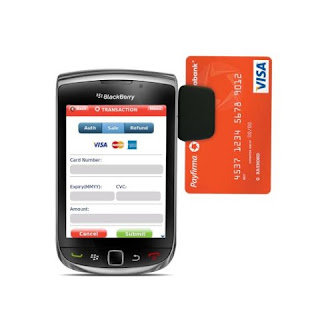
Mobile Payment Applications
A sales opportunity may occur anywhere. Mobile
payment applications allow small business owners to accept credit card payments
via smartphone. Some applications work in conjunction with a swiping mechanism.
Others use a call-in mechanism. Popular mobile payment devices and applications
include: Square’s card reader, Intuit GoPayment application and Visa PayWave
application. These applications are as easy to use as swiping a credit card in
a store.
Money Transfer Applications
Money transfer applications may be required in the case of emergency. Money may need to be transferred to a business partner, vendor or other interested party within a short period of time. Money transfer applications are easy to use and will significantly improve productivity. Businesses often use applications such as PayPal.
Mobile Advertising and Location-Based Advertising
To increase sales and traffic to a business location, location-based advertising is a must. Applications facilitate location-based and mobile advertising. By the end of 2012, Gartner expects businesses to spend $7.5 billion on mobile advertising.
Mobile advertising is a proven way to generate leads and revenue. Business owners should be listed on location-based advertising applications to improve profitability. Some businesses will offer a discount each time a customer checks into a location. Foursquare is an application designed to generate physical traffic for businesses.
Try user-friendly applications to improve efficiency of the workplace environment. These applications may be used with smartphones, tablets, laptops and PCs. Try new applications and be converted into a techno-savvy business person.


 Posts
Posts



